Browse

Latest Headlines

Fresh headlines, crisp visuals — faster reading.

Gillian Anderson's Bold Revelation: Why Her Pansexual Identity Matters New

Gillian Anderson's Bold Revelation: Why Her Pansexual Identity Matters

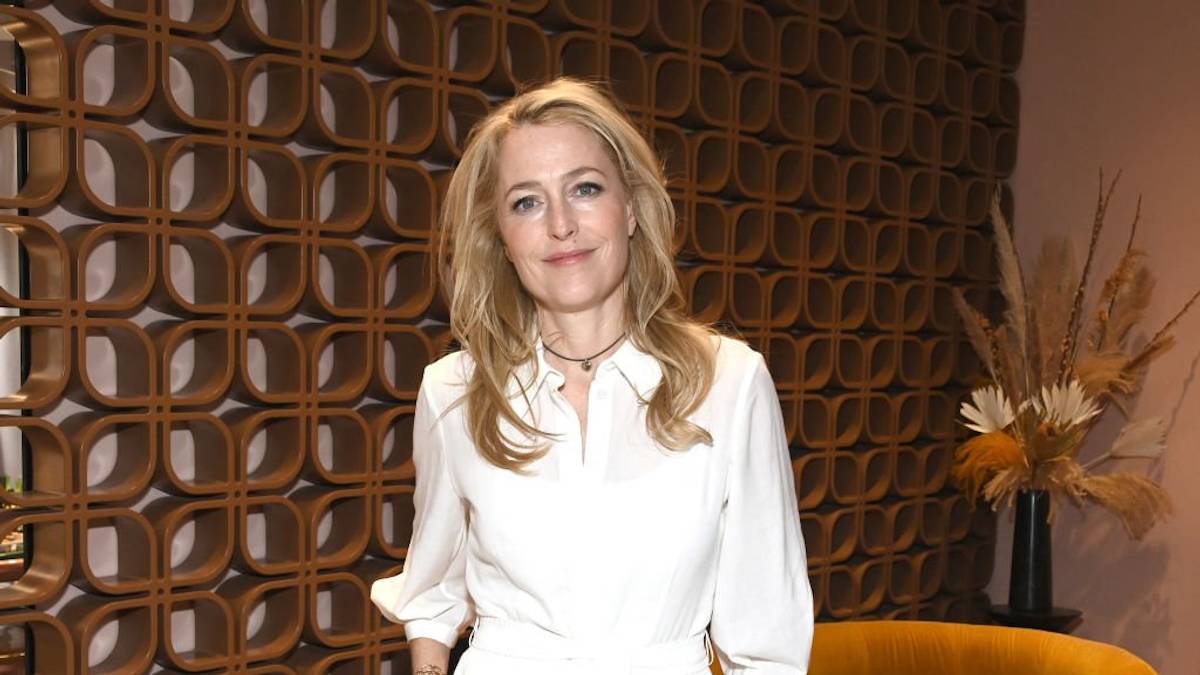
Acclaimed actress Gillian Anderson has chosen a specific label to describe her sexuality, opening up in a candid new interview about her personal identity. The award-winning star officially shared that she identifies as pansexual, clarifying her place on the LGBTQ+ spectrum after years of discussing her fluid approach to love and attraction. Speaking in an interview with The Australian published on September 10, the 58-year-old actor offered a direct and clear description of how she views herself. Her statement marks a significant step forward in her public journey, giving her fans a transparent look into her personal growth and understanding. The star of classic television hits and modern prestige dramas explained that she is "pan, as in pansexual, as in attracted to all genders." While Anderson has previously spoken openly about her relationships with women and her broader sexual fluidity, this latest statement reflects a firm embrace of a term that fully captures her experience. During a 2024 discussion with The New Yorker, she pondered her identity out loud, questioning whether terms like bisexual or pansexual fit her best. Now, she has officially chosen the descriptor that aligns with her life. Gillian Anderson. Credit: Araya Doheny / Getty Embracing vulnerability and desire Currently in a relationship with screenwriter Peter Morgan, Anderson spoke at length about intimacy, desire, and self-acceptance. The interview coincides with the promotion of More, her follow-up project to her bestselling 2024 book Want. Both books assemble anonymous sexual fantasies and intimate reflections from women across the globe. Serving as a facilitator for these personal submissions, Anderson curated stories covering everything from explicit encounters to tender reflections on grief, body image, and passion. Reflecting on her own nature, Anderson noted that she considers herself "a very sexual being", though she acknowledged that her relationship with her sexuality has transformed over the years. She credits her role as sex therapist Jean Milburn on the hit series Sex Education with sparking her willingness to speak openly about sex , which ultimately inspired her literary projects. Now in her late 50s, she feels far more comfortable and grounded in her own skin. "I feel like we can take on the world," she said regarding this stage of her life. A legacy of advocacy and screen roles Anderson has built a strong connection with LGBTQ+ audiences over her decades in the entertainment industry. From her famous portrayal of Dana Scully in The X-Files to Jean Milburn in Sex Education, her career choices have consistently resonated with queer viewers. Her role in the film Teenage Sex and Death at Camp Miasma further highlights this connection, featuring queer themes and sapphic intimacy. Although she hints that her current focus on sex-related topics may be coming to a close, she remains fully engaged in the discussion for now. "Once this book is done and once this film [Miasma] is done, I feel like… it might be the end of this chapter of my life," she admitted. Even as she prepares for future shifts in her career, she continues to talk openly about physical attraction. When asked about features she finds appealing, she noted forearms and hands on men, along with lips, buttocks, and the clavicle on women. Featured image credit: Araya Doheny / Getty

Sep 10, 2026
Morning Joe's On-Air Clash Over Netanyahu Sparks Intense Reactions New

Morning Joe's On-Air Clash Over Netanyahu Sparks Intense Reactions

Joe Scarborough erupted at panelist Donny Deutsch during a heated on-air clash over a report that Israeli Prime Minister Benjamin Netanyahu was warned Hamas was planning a major attack shortly before the Oct. 7, 2023 massacre — at one point demanding, “Do I look stupid to you?”The “Morning Joe” host grew visibly frustrated during the MS NOW broadcast on Wednesday as Deutsch repeatedly stressed Hamas’ responsibility for the slaughter while Scarborough pressed him over the explosive Haaretz report and Netanyahu’s handling of the alleged warning.“Look at me in my eyes,” Scarborough told Deutsch. “Do you think that I’m going to be distracted by you saying what I’ve said a million times?”MS NOW’s Joe Scarborough of “Morning Joe” gestures during a heated argument on Wednesday as his co-host wife Mika Brzezinski (left) looks on. MS NOWScarborough added that he had repeatedly called Hamas terrorists before demanding: “Now, can we talk about Netanyahu, or do you just not want to talk about him?”Deutsch insisted he was not defending the Israeli leader.“I don’t know what went down, and we don’t know,” Deutsch said.“Does that not concern you?” Scarborough shot back. “We ask questions about 9/11. Are you willing to ask questions about Netanyahu?”Scarborough erupted at Donny Deutsch (pictured) during a heated on-air debate over a Haaretz report alleging Israeli Prime Minister Benjamin Netanyahu received a warning ahead of the Oct. 7 attack. MS NOW“I’m willing to answer questions. I’m willing to ask the questions,” Deutsch replied.Scarborough told The Post that he and Deutsch frequently get heated during arguments, though viewers know it’s an animated discussion between two friends.“Donny and I have been great friends for 20 years. We’re both strong supporters of Israel,” Scarborough told The Post.“Look at me in my eyes,” Scarborough told Deutsch during the tense exchange. MS NOW“We just had a disagreement today on whether we should talk about the Haaretz report and talk about what Netanyahu’s responsibility was in it,” he added.Scarborough said Deutsch “felt like any criticisms of Netanyahu would somehow overshadow the fact that October 7th was Hamas’s fault.“We all have said for years that Hamas are terrorists, that they want to kill Jews, that they want to destroy the state of Israel, and that they are an evil force in the region,” Scarborough told The Post.Scarborough rejected any suggestion that the blowup reflected a personal rift between the longtime pals.“We’re great friends, and we’ve done that before, and I don’t think we’d talk that way with somebody that we weren’t so comfortable with,” he said.“He cares passionately about the issue. I care passionately about the issue.”Scarborough also made clear that he remains opposed to Netanyahu staying in power.“I don’t think Benjamin Netanyahu running Israel for another three, four, five years is in the country’s best interest,” he told The Post.The Haaretz investigation published Monday alleged UAE President Sheikh Mohammed bin Zayed warned Netanyahu in a 45-minute phone call roughly a week and a half before Oct. 7, 2023 that Hamas leader Yahya Sinwar was preparing a major operation against Israel.Deutsch insisted, “I’m not here to defend Bibi Netanyahu,” as Scarborough challenged him over the Israeli leader. MS NOWHaaretz reported that three senior foreign sources were familiar with the contents of the alleged conversation. It took place after bin Zayed received information that Sinwar had warned he was preparing a “zilzal,” Arabic for “earthquake,” according to the outlet.Netanyahu has flatly denied the report, calling it an “absolute lie.”“Prime Minister Netanyahu didn’t speak to the president of the UAE during the period in question and received no warning from him,” his office said.Israeli Prime Minister Benjamin Netanyahu has flatly denied Haaretz’s report that he received a warning from the UAE president shortly before Oct. 7, 2023. POOL/AFP via Getty ImagesNetanyahu said Wednesday that his office, the National Security Council and his military secretary reviewed his call logs and found no record of a conversation with the UAE president between the beginning of September and Oct. 7, 2023.He also instructed his lawyers to move toward a libel suit against Haaretz and journalists involved in the reporting. Haaretz said it stands by its article.The UAE’s foreign ministry has declined to address reports about conversations between the two leaders, while saying Emirati and Israeli government officials have maintained direct lines of communication since relations were established.The Post has sought comment from the Israeli government and Netanyahu’s office.

Sep 10, 2026
United Airlines' Dubai Flights Suspended Until 2027: What’s Behind the Delay? New

United Airlines' Dubai Flights Suspended Until 2027: What’s Behind the Delay?

The world’s largest airline is delaying its return to this popular travel destination until next year.With persisting conflict in the Middle East, United Airlines, among others, suspended flights to Dubai International Airport back in February. United has now revealed it will not resume direct flights to the popular destination until at least March 2027.In March 2026, United Airlines Flight 164 from Newark Liberty International Airport (EWR) was headed to Dubai, but was forced to turn back after Israel attacked Iran and prompted the closure of Iranian airspace. United suggests booking with its partner airline, Emirates, which still flies to Dubai from major US hubs. Luiz C. Ribeiro for New York PostSince then, United Airlines has issued a travel warning for flights in the Middle East, considering the U.S. Department of State currently has both the United Arab Emirates and Israel under “Reconsider Travel” advisories. Dubai airport had restricted foreign airlines to just one daily flight to its airport until May 31 due to the Iran crisis but lifted this policy on May 31. Still, airlines are wary of the immediate reinstatement of their flights.United also suspended its route from San Francisco to Tel Aviv in late February 2026 in light of the Middle Eastern conflict, but announced it is resuming flights between EWR and Tel Aviv on Sep. 8.The airline won’t restart its Newark route to Dubai, despite its popularity among American visitors. Last year, over 1.4 million Americans visited Dubai, constituting 7% of the city’s overnight visitors. PYOK suggests that since Dubai is much closer to Iran, it is at more risk of kamikaze drones and missile attacks, despite local officials reporting very few attacks in territorial waters rather than the city itself. Flight cancellations and complications have been consistent this year globally. Back in January, major airlines cancelled flights across the Middle East due to anxieties that the US was preparing to strike Iran. Flights to Israel, the United Arab Emirates and Saudi Arabia were all suspended by various European airlines, with continued suspension to Israel in mid-March. When service was still running, United operated a daily flight from EWR to Dubai: Flight UA164 departed from Terminal C every evening to Terminal 3 at Dubai International Airport. Several non-U.S. and non-UAE airlines (such as Lufthansa, British Airways, and Air Canada) have suspended or delayed their own regional service resumptions into parts of the Middle East through late October 2026 or January 2027. Oleg Zhukov – stock.adobe.comWhile United Airlines announced the intended return of the Dubai flight, it remains to be seen if the date will be pushed back. Customers affected by the cancellation of flights originally scheduled between October 24, 2026 and March 27, 2027 will be offered full refunds.In the meantime, travelers can fly Emirates, which continues to offer nonstop flights between Dubai and six US-based travel hubs, including Chicago, San Francisco and Houston.United Airlines isn’t alone in delaying the return of its direct Dubai flight. Air Canada aims to return in January 2027, and British-based Virgin Atlantic won’t have the flight return until the 2027 winter season.

Sep 10, 2026
Lone Juror's Shocking Act Stirs Tension in Lindsay Clancy Trial New

Lone Juror's Shocking Act Stirs Tension in Lindsay Clancy Trial

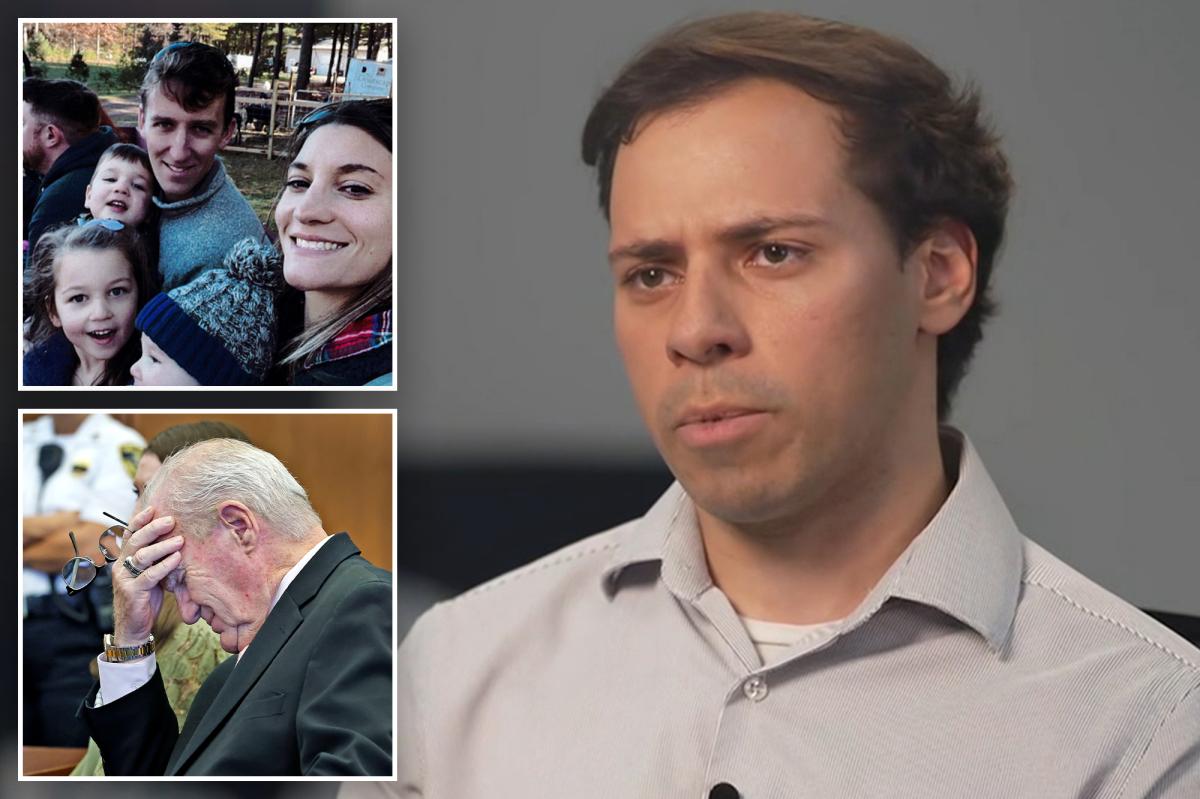
A male juror in the mistrial of Lindsay Clancy said the lone holdout on the 12-person panel wrapped one of the exercise bands the mom used to kill her children around a water bottle to mimic their strangulation in the deliberation room.Juror number 10 Nick Dargie said the holdout had every right to his opinion but that the reenactment using the same exercise bands left the room speechless.“I was so shocked. We’re not here to play detective – it’s not a game of Clue. This is serious,” Dargie, 25, the fifth juror to come forward in the macabre case out of Duxbury, Mass., told ABC’s “GMA” in an interview that aired Thursday morning.Nick Dargie is one of the three male jurors on the Lindsay Clancy trial. ABC NewsLindsay and Patrick Clancy pose with their children Cora, 6, Dawson, 3, and Callan, 8 months, in 2022. Plymouth Superior Court“I asked him why are you doing that? That’s a band that was used to strangle a child. That’s disgusting.”He also accused the still-unnamed holdout, who hung the jury in an 11-1 deadlock leading to the mistrial, of seeming disengaged during the deliberations, saying he would frequently be scrolling his phone while people were talking to him.When pressed to explain his refusal to budge, Dargie said he made no effort to explain his reasoning.“There wasn’t a single piece of evidence or witness testimony that he used to prove why he was thinking the way he was,” the juror said.Juror number 10, Nick Dargie, said the holdout had every right to his opinion but that the reenactment using the same exercise bands left the room speechless. ABC News“Otherwise, like there’s nothing wrong with somebody having a completely opposite opinion … that would be a hung jury. That, like that, is our justice system,” Dargie added.It was this that prompted the jury to send a note alerting Judge William Sullivan they remained deadlocked after 38 hours of deliberation.Dargie admitted “several” jurors were initially leaning toward a guilty verdict, but ultimately said he found the prosecution’s case “inconsistent” and the experts called by the defense more believable.Defendant Lindsay Clancy and attorney Kevin Reddington listen to the judge declare a mistrial on Friday, September 4, 2026, in Plymouth, U.S. via REUTERSDefense attorney Kevin Reddington reacts to the judge’s decision to declare a mistrial in the Lindsay Clancy murder trial. Greg Derr/Pool The Patriot Ledger via APHe said he believes the 11 members of the jury in the not-guilty-by-reason-of-insanity majority felt “defeated” after the non-verdict.“We spent seven weeks on this trial, almost two months of all our lives dedicated to it.”Here’s the latest on Lindsay Clancy’s murder trial: Kevin Reddington defends Lindsay Clancy’s ex Patrick against ‘horrific conspiracy allegations’: ‘Stop with the speculation’ Lindsay Clancy jurors detail just what happened behind closed doors — and how a not guilty verdict nearly came down ‘Harsh’ Lindsay Clancy prosecution backfired, instead proving she was good mom who ‘snapped’: jurors Lindsay Clancy juror defends lone holdout, makes surprising admission about others on the panel Juror No. 5 in the case, one of nine women on the panel, said the others tried in vain to convince the holdout juror to change his vote after he allegedly “admitted he had reasonable doubt” but refused to say she was not guilty.Defendant Lindsay Clancy watches jurors enter the courtroom on Friday, September 4, 2026. The jury resumed deliberations for an eighth day. USA TODAY Network via Reuters ConnectHowever, the juror, who spoke to CBS on the condition of anonymity, actually defended the holdout, and said he wasn’t entirely alone in his view.“The stand-alone juror was not the only one that was unwilling to see things from the other side. So, I’m going to kind of defend that individual in a sense,” she said.“There were some big personalities in that room. But at the end of the day, I feel like it just came down to an inability to kind of move past your convictions,” the anonymous panelist added.Clancy allegedly strangled her daughter Cora, five, and son Dawson, three, and tried to suffocate her baby son before plunging from the second-floor window. Facebook / Lindsay Marie Clancy“At the end of the day, there was so much doubt,” she said.“The prosecution didn’t have a figurative smoking gun. There was not a single moment throughout the presentation of that case where you could say ‘Yup, 100% I’m certain she did it’ or that she didn’t do it. There was too much gray area.”Clancy, 36, remains in a state-run psychiatric facility, Tewksbury Hospital. Her next hearing is scheduled for Sept. 29.

Sep 10, 2026
Shania Twain's Surprising Connection with Harry Styles and Sabrina Carpenter New

Shania Twain's Surprising Connection with Harry Styles and Sabrina Carpenter

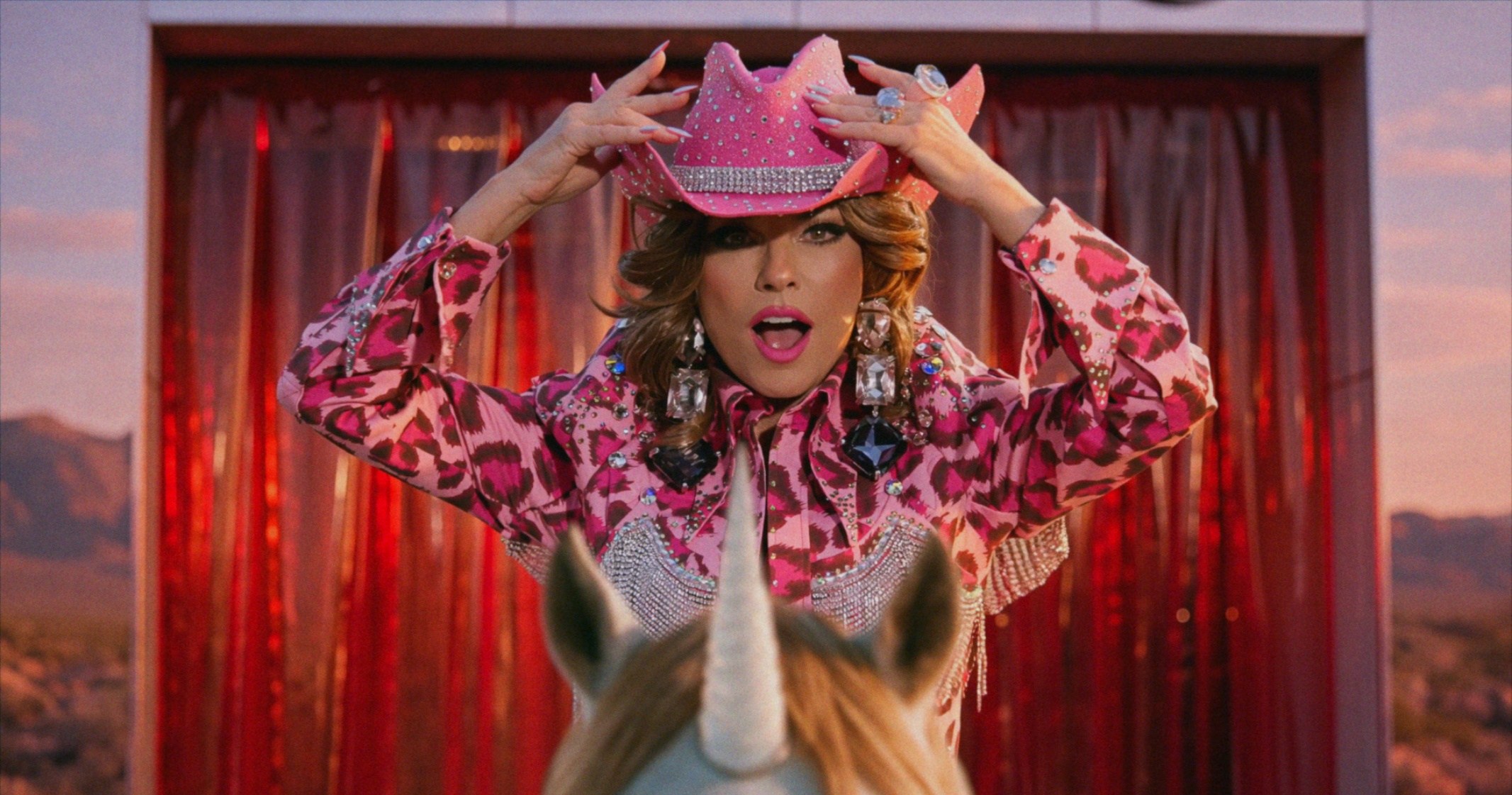
Shania Twain can’t help but be inspired by the new generation of artists showcasing their talents and musical gifts with the world, including Harry Styles and Sabrina Carpenter. “Well, there's always so much room for inspiration, and being around younger artists and meeting them and performing with them gives me a lot of hope about where we're going with music and creativity,” Twain, 61, exclusively told Us while promoting her collaboration with Candy Crush’s new music season. “They're just so full of new ideas, and that's where inspiration comes from. Being around people that, you know, are doing things you may never have thought of [or] doing things in a different way you may never have.” Another artist impressing Twain very much is Zedd. The record producer and DJ recently worked on a vibrant remix of “‘You're Still the One” for Candy Crush's 30th anniversary, as the centerpiece of Candy Crush's new music season. This pairing keeps the heart of the original intact while handing it a new pulse, turning it into a dance track built for right now, without losing what made it timeless in the first place. “That's certainly a genre that I wouldn't have imagined for ‘You're Still the One,’ so this is what young people do,” Twain explained. “They come up with all kinds of really fun things that continue to inspire me, so it's really great new juice and I like being around it. It’s a joy.” In July, Twain released her seventh studio album, Little Miss Twain — which features collaborations with country music legend Tanya Tucker, Queens of the Stone Age frontman Josh Homme and acclaimed duo The War and Treaty. That same month, Twain had to miss out on Taylor Swift and Travis Kelce’s wedding at New York City’s famed Madison Square Garden because she’d committed to supporting Styles, 32, on his Together, Together tour at Wembley Stadium, which had a show on the same date. “I really was sad that I couldn't make that,” Twain told Us. “I already committed to Harry, and, of course, I would never go back on a commitment.” She continued, “That was just very strange timing. I wouldn't say it's unfortunate because I really enjoyed my shows at Wembley. Of course, I loved it ... Our stars will have to align another time.” Twain joked that she “will have to” send Swift and Kelce, both 36, a nice wedding gift to make up for her absence. Meanwhile, the country music legend has built a sweet friendship with Styles after he previously named her as one of his musical inspirations. Speaking to Us, Twain teased that she would “love to” follow up her and Harry’s recent tour dates by getting into the studio together. “That would definitely be a dream for me to get in the studio with him and just pump out some ideas … whatever would come of it. … But he's a very busy person right now,” she noted. “It'll take a while to probably nail him down with his schedule. Those times when you're full-time touring, in a full-time touring mode, it's very difficult to fit in recording time, but yeah, I think that's in the future for us.” Asked what a potential collaboration with Styles might sound like, Twain told Us, “We haven't actually talked about it because … we've just been on different paths. Coming together for the Wembley shows was very, very [rare]. We were very lucky that that worked.” “I don't know what that would look like,” she said of a potential musical project with Styles. “I think it would be very casual and fun. There'd be a lot of laughs. He's got a great personality. He's easygoing, and we're both very creative. So I think it would be just two creative people getting together who have a mutual respect.” For now, Twain is loving Zedd’s vibrant remix of “‘You're Still the One” for Candy Crush, “When [these two styles] come together, it's this explosion of a candy-coated country world,” she declared. “So it's just a really fun take on a classic song, and I feel like it's been refreshed with Zedd's animated sound that works really well with the animation and the spirit of this treasure hunt and excitement of all the colors. It's just a lot of fun. It's taken this beautiful love song into a whole different world of love, I guess you could say. It's really great. It's exciting, and it's another platform for one of my classics. I'm excited about it.” She added, “I think it's just a whole new, wonderful energy to the song, and it just gives a second life to something that we already know and has been in our lives for so many years now. It's like hitting the refresh button on something. It's fabulous.”

Sep 10, 2026
Mariska Hargitay's Surprising Favorite Moment from Taylor Swift's Wedding New

Mariska Hargitay's Surprising Favorite Moment from Taylor Swift's Wedding

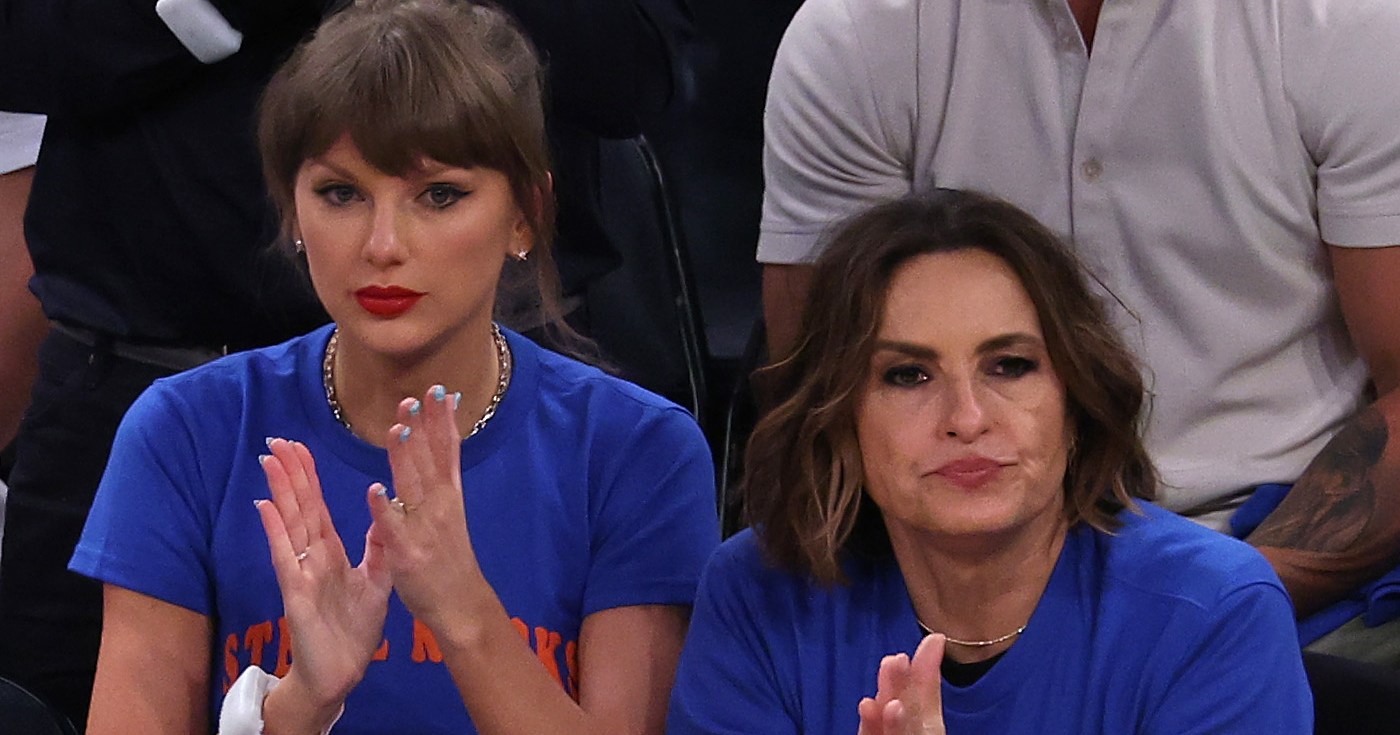
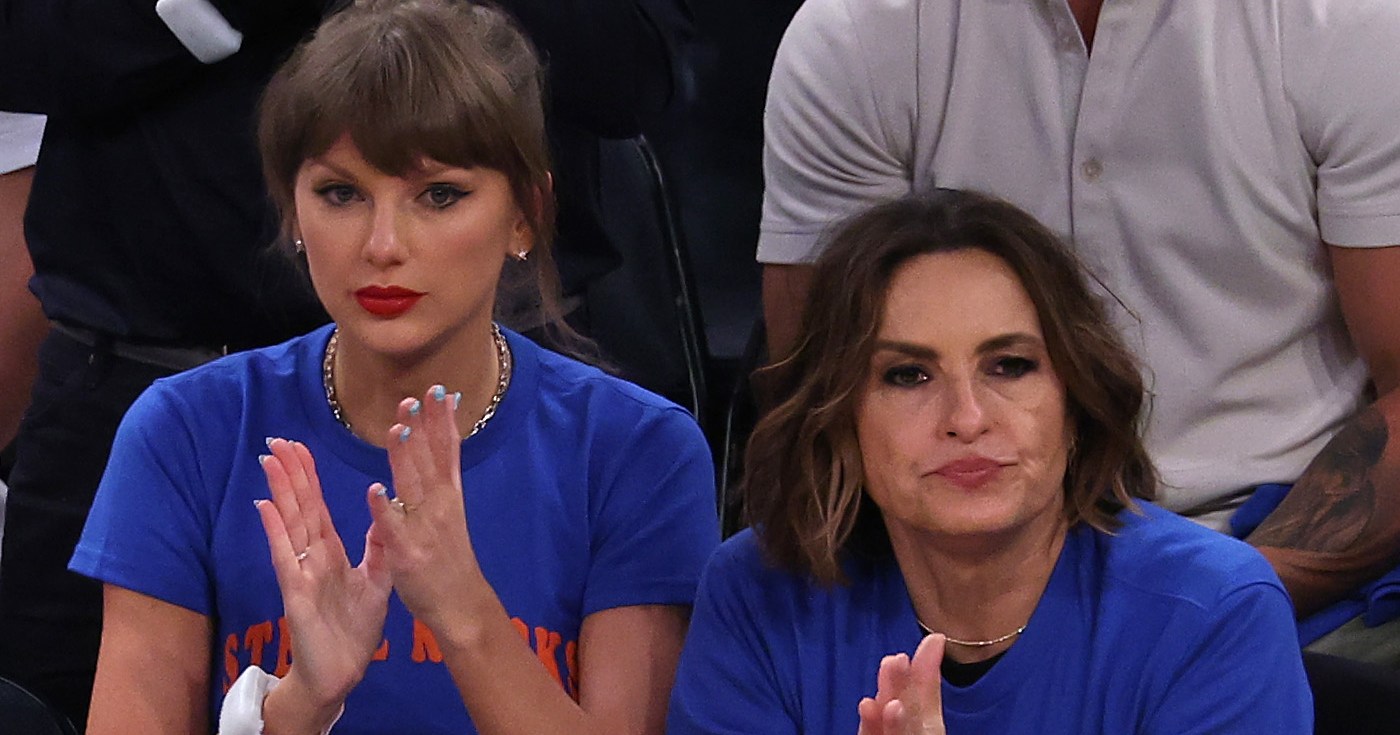
Mariska Hargitay is still on cloud nine after attending Taylor Swift and Travis Kelce’s wedding. The Law & Order: SVU icon, 62, was on hand for the couple’s July 3 nuptials at Madison Square Garden in New York City with her husband, Peter Hermann, and shared details from the special night during an appearance on Jimmy Kimmel Live! on Wednesday, September 9. “I did [go to the wedding],” Hargitay shared. “And I’m still floating from that wedding.” She added, “It was so spectacular and so intimate, I have to say. I have to say, I am blown away, because when there’s a wedding with that many guests, you think, ‘OK, it’s gonna be that.’ And it just wasn’t.” According to Hargitay, Swift and Kelce, both 36, managed to turn MSG, which has a capacity of 20,000 people, into a sweet and intimate venue for their guests. “I even say that the vows were my favorite part of the whole wedding. It was that magical,” Hargitay revealed. Back in June, Hargitay and Swift were seen sporting matching T-shirts when they were front row to support the New York Knicks in Game 4 of the NBA Finals against the San Antonio Spurs. Both stars wore cute shirts that read “Stevie Knicks” in the Knicks’ trademark blue and orange colors. “It was pretty spectacular. I had run from my theater — I was doing a play at the time — [I] physically ran from my theater to the game,” Hargitay recalled on Wednesday’s Jimmy Kimmel Live! She said, “We were sitting together and I was wearing a black T-shirt, and Taylor, being the prepared woman that she is, was like, ‘I got you.’ Basically handed [the shirt] to me, I put it on, and that was the end of it.” Swift and Hargitay’s friendship became over a decade ago when Swift named her cat Olivia Benson after the actress’ SVU character. They have been close friends ever since, with Hargitay appearing in Swift’s iconic “Bad Blood” music video in 2015. “It was so fun. It’s the best music video,” the actress gushed in a June 2025 interview on the “Call Her Daddy” podcast. “That was the most fun, being in the squad with all the cool girls and supermodels. It was the most fun ever.” “I learned so much from her,” Hargitay added, calling Swift a “boss lady” who was “warm and smart and kind.” “That’s what I love about her is [that] she’s so young, but she shows us in such beautiful ways how to be fearless,” she shared.

Sep 10, 2026
Hunter Biden's Meme Coin Drama: One Trader Strikes Gold Amid Chaos New

Hunter Biden's Meme Coin Drama: One Trader Strikes Gold Amid Chaos

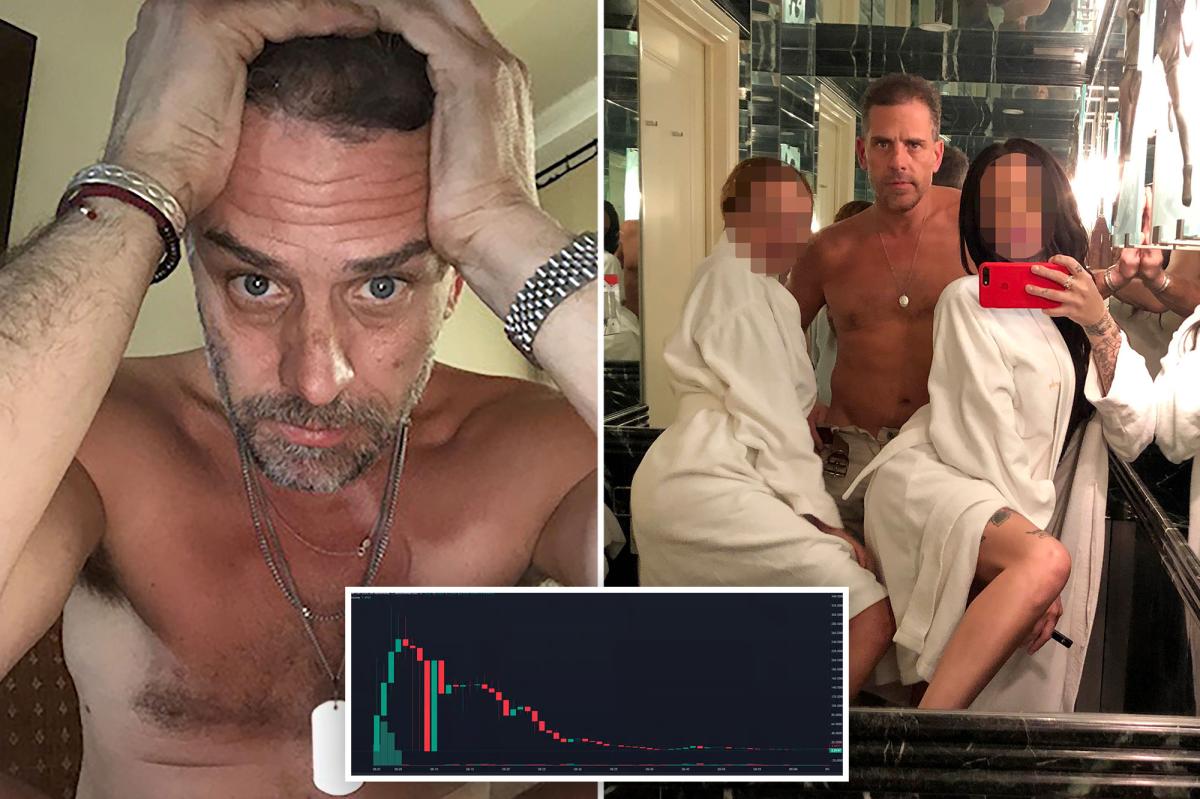
Four out of five people who bought into Hunter Biden’s new meme coin saw their investments go up in smoke during the cryptocurrency’s spectacular launch-day collapse on Wednesday — even as one mystery trader turned a roughly $250,000 bet into $1.18 million within minutes, The Post has learned.An individual trading under a pseudonym spent about $250,000 to acquire 9,124 of Biden’s $LAPTOP tokens before unloading 8,480 of them minutes later for about $1.18 million, according a blockchain analysis by Datavault AI. That amounted to a gain of roughly $930,000 before transaction costs.Hunter Biden’s $LAPTOP meme coin left many buyers nursing losses after a spectacular launch-day spike and collapse. Obtained by NY PostOther traders weren’t nearly as fortunate.One buyer who plowed roughly $200,000 into the token near its fleeting peak saw the position dwindle to around $2,000 as $LAPTOP came crashing back to earth, according to Datavault’s analysis.“That’s the tragedy in these coins,” Datavault AI CEO Nathaniel Bradley told The Post while discussing investors who bought $LAPTOP at its eye-popping early prices.The token briefly shot above $300 during Wednesday’s chaotic debut before plunging to just a few dollars, wiping out more than 99% of its peak price within hours.“To come out and say that a laptop coin is worth $300 is, in my opinion, fraudulent,” Bradley said.Hunter Biden’s new token briefly soared above $300 before surrendering more than 99% of its peak price. DexscreenerBradley characterized the launch as a “classic ‘rug pull.'”The term describes a crypto scheme in which developers or insiders extract value from a project or abandon it, leaving other holders with sharply devalued tokens.There has been no finding that Biden or the $LAPTOP project engaged in fraud or a rug-pull scheme, and Datavault’s analysis has not established that Biden himself sold tokens during the price collapse.Exactly how much Biden may have personally made from $LAPTOP — if anything — remains unclear.Biden launched $LAPTOP earlier this week, transforming the controversy surrounding his infamous computer into a cryptocurrency venture. Obtained by NY PostThe project’s founders, including Biden, were slated to receive 30% of its 1 billion-token supply, according to the Wall Street Journal.Those founder tokens were set to be locked for six months and become fully available over two years, according to the Journal — meaning their theoretical value during $LAPTOP’s fleeting surge cannot be treated as money Biden actually pocketed.Bradley said blockchain records should eventually make it possible to trace $LAPTOP transactions and determine how much money flowed to wallets associated with its principals.“We will be able to see finitely exactly how much,” he told The Post, though he added that he had not yet completed the analysis necessary to put a dollar figure on Biden’s personal proceeds.The 56-year-old son of former President Joe Biden launched $LAPTOP this week on Base, the blockchain developed by crypto exchange Coinbase.Exactly how much Hunter Biden personally made from the $LAPTOP launch remains unclear. Obtained by NY Post“They turned laptop into a weapon. I turned it into a token,” Biden wrote on X ahead of the launch.The token takes its name from the laptop that became a political firestorm during the 2020 presidential campaign after The Post first reported on its contents, including messages concerning Biden’s overseas business dealings and photos documenting his drug use.The Post has sought comment from Hunter Biden.

Sep 10, 2026
The Magical Moment Mariska Hargitay Can't Forget from Taylor Swift's Wedding New

The Magical Moment Mariska Hargitay Can't Forget from Taylor Swift's Wedding

Mariska Hargitay is still on cloud nine after attending Taylor Swift and Travis Kelce’s wedding. The Law & Order: SVU icon, 62, was on hand for the couple’s July 3 nuptials at Madison Square Garden in New York City with her husband, Peter Hermann, and shared details from the special night during an appearance on Jimmy Kimmel Live! on Wednesday, September 9. “I did [go to the wedding],” Hargitay shared. “And I’m still floating from that wedding.” She added, “It was so spectacular and so intimate, I have to say. I have to say, I am blown away, because when there’s a wedding with that many guests, you think, ‘OK, it’s gonna be that.’ And it just wasn’t.” According to Hargitay, Swift and Kelce, both 36, managed to turn MSG, which has a capacity of 20,000 people, into a sweet and intimate venue for their guests. “I even say that the vows were my favorite part of the whole wedding. It was that magical,” Hargitay revealed. Back in June, Hargitay and Swift were seen sporting matching T-shirts when they were front row to support the New York Knicks in Game 4 of the NBA Finals against the San Antonio Spurs. Both stars wore cute shirts that read “Stevie Knicks” in the Knicks’ trademark blue and orange colors. “It was pretty spectacular. I had run from my theater — I was doing a play at the time — [I] physically ran from my theater to the game,” Hargitay recalled on Wednesday’s Jimmy Kimmel Live! She said, “We were sitting together and I was wearing a black T-shirt, and Taylor, being the prepared woman that she is, was like, ‘I got you.’ Basically handed [the shirt] to me, I put it on, and that was the end of it.” Swift and Hargitay’s friendship became over a decade ago when Swift named her cat Olivia Benson after the actress’ SVU character. They have been close friends ever since, with Hargitay appearing in Swift’s iconic “Bad Blood” music video in 2015. “It was so fun. It’s the best music video,” the actress gushed in a June 2025 interview on the “Call Her Daddy” podcast. “That was the most fun, being in the squad with all the cool girls and supermodels. It was the most fun ever.” “I learned so much from her,” Hargitay added, calling Swift a “boss lady” who was “warm and smart and kind.” “That’s what I love about her is [that] she’s so young, but she shows us in such beautiful ways how to be fearless,” she shared.

Sep 10, 2026
Clint Eastwood's Legacy: Is 'Juror No. 2' His Final Act?

Clint Eastwood's Legacy: Is 'Juror No. 2' His Final Act?

At 96 years old, Clint Eastwood stands as one of the last living giants of a Hollywood era that may never exist again. For more than six decades, he has stared down outlaws, challenged injustice, confronted mortality, and told stories that have left an unmistakable mark on American cinema. But now, as the legendary actor and filmmaker enters the twilight of an extraordinary life and career, one question hangs heavily over Hollywood: have we already witnessed Clint Eastwood’s final film?His latest directorial project, Juror No. 2, has taken on a meaning far greater than that of another courtroom thriller. With Eastwood now well into his 90s, the film has inevitably fueled speculation that it could represent one of the final chapters—perhaps even the last—of a career unlike almost any other in movie history.And if it is the end, few Hollywood farewells could feel more fitting.Eastwood’s journey began long before he became the silver-haired filmmaker audiences know today. In the 1960s, he emerged from the dust and silence of Sergio Leone’s legendary spaghetti Westerns as the mysterious Man with No Name. With a poncho over his shoulders, a cigar between his teeth, and a stare capable of saying more than pages of dialogue, Eastwood transformed himself into an international star.Then came “Dirty Harry” Callahan.With his cold determination and uncompromising attitude, Eastwood created another character that would become permanently embedded in popular culture. But behind the tough exterior was an artist who refused to remain trapped by the image that had made him famous.As the years passed, Eastwood began stepping behind the camera—and Hollywood discovered something remarkable.The gunslinger could tell stories.With Unforgiven in 1992, Eastwood returned to the Western genre only to tear apart many of the myths that had helped build his career. The haunting film examined violence, regret, revenge, and the terrible consequences of a life spent pulling the trigger. It earned four Academy Awards, including Best Picture and Best Director.More than a decade later, Eastwood delivered another devastating masterpiece with Million Dollar Baby. The film earned four Academy Awards and gave Eastwood his second Oscar for Best Director.Movies such as Mystic River, Letters from Iwo Jima, and Gran Torino further revealed a filmmaker increasingly fascinated by guilt, loss, redemption, mortality, and the complicated choices people make when there are no easy answers.Perhaps that is why Juror No. 2 feels so appropriate at this stage of his career.The story follows Justin Kemp, a family man serving on the jury of a murder trial. But as the evidence unfolds, he is confronted with a horrifying possibility: he may have unknowingly played a role in the victim’s death.Suddenly, he is no longer simply deciding whether another man is guilty.He is confronting his own conscience.Tell the truth and potentially destroy his life—or remain silent and risk allowing an innocent person to suffer the consequences.It is exactly the kind of moral gray area Eastwood has spent much of his career exploring.There are no easy heroes. No perfect villains. Only human beings forced to live with the consequences of their choices.That makes the possibility of Juror No. 2 being among Eastwood’s final films especially poignant.For decades, Eastwood portrayed men who rarely spoke about fear, regret, or mortality. Yet as he grew older, his movies became increasingly reflective. Gran Torino confronted sacrifice and prejudice. The Mule explored regret and the painful realization that time cannot be recovered. Cry Macho examined aging, masculinity, and what truly makes someone strong.The young gunslinger who once seemed invincible eventually became an old man looking back at the cost of a lifetime.And somehow, audiences grew older alongside him.That may be the most remarkable part of Clint Eastwood’s legacy.Generations have known a different version of him. Some remember the mysterious cowboy walking through dusty Western towns. Others remember Dirty Harry standing alone against criminals. Another generation discovered the Oscar-winning director behind some of Hollywood’s most emotionally powerful films.Yet through every transformation, Eastwood remained unmistakably himself.His filmmaking style became famous for its simplicity. His sets were reportedly calm and efficient. He trusted actors rather than overwhelming them with endless takes, and many performers delivered some of the finest performances of their careers under his direction.There was rarely unnecessary spectacle.The story came first.Even as Hollywood changed around him—through new generations of stars, technological revolutions, streaming services, and enormous shifts in popular culture—Eastwood simply kept making movies.Year after year.Decade after decade.Well into his 90s.That kind of longevity is almost impossible to comprehend.Most careers have a beginning, a peak, and an ending. Eastwood somehow turned his into an entire lifetime of cinema.And that is why the thought of a final Clint Eastwood movie carries such emotional weight.Eventually, there will come a moment when there is no next Eastwood film waiting to be announced. No new set photograph. No quiet figure sitting behind the camera preparing another story.When that day comes, Hollywood will lose more than a filmmaker.It will lose one of its last direct connections to a completely different era of cinema.From the dusty landscapes of the 1960s Western to the morally complicated dramas of the modern age, Clint Eastwood has spent more than six decades reminding audiences that the most powerful stories are rarely about perfect people.They are about flawed people.People who make mistakes.People searching for redemption.People trying to do the right thing when every choice carries a price.Whether Juror No. 2 ultimately proves to be his final directorial statement or simply another chapter in an astonishing career, its themes of truth, guilt, justice, and consequence feel almost poetic coming from Eastwood.At 96, Clint Eastwood has nothing left to prove.The awards have been won. The iconic characters have been created. The classics have already been made. His place in cinema history was secured decades ago.Yet perhaps his greatest achievement is simpler than any trophy or box-office number.He endured.Through more than 60 years of Hollywood changing around him, Clint Eastwood kept telling stories.And whenever the final credits eventually roll on his extraordinary career, one thing is certain:Hollywood will never see another Clint Eastwood.

Sep 09, 2026
Why Dolly Parton Chose Not to Have Children: The Story Unveiled

Why Dolly Parton Chose Not to Have Children: The Story Unveiled

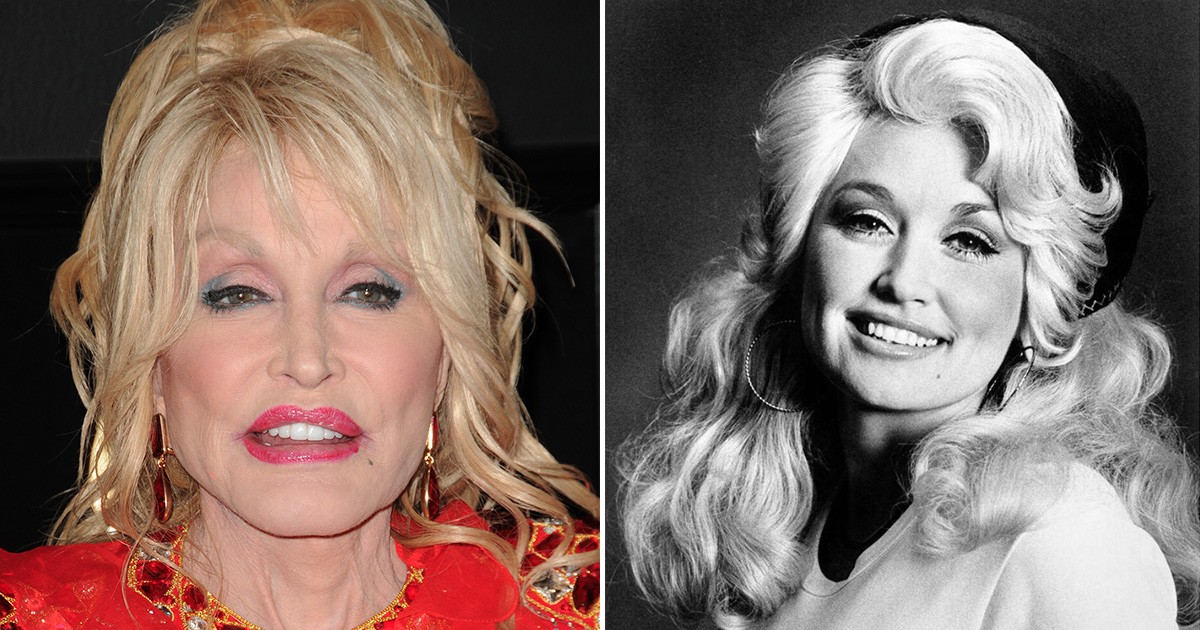
Dolly Parton has died at the age of 80. The country star was a true legend in music, but did much more than just music. Parton was always keen on helping others, doing the best she could by giving away books to young children and trying to brighten people’s days during the COVID-19 pandemic, as well as donating money for the vaccine. However, Dolly never had children of her own. Why? Here’s the reason.On Tuesday, Dolly Parton’s family announced that the country legend had passed away at age 80. Her nephew, Bryan Seaver, revealed the news through her Instagram.“This video announcement is something Dolly asked of me years ago, before I fully absorbed it as a future reality. As her head of security for more than two decades, a role my father Larry held before me, I have imagined the heaviness of this moment but haven’t truly felt it until now,” Seavers said.Dolly Parton dead at 80He continued. “It is an honor, an honor that is mixed with absolute pride and great sadness. But sadness lies with us, not with Dolly. Dolly has lived in the light and is in the arms of Jesus, surely met by Carl, her parents and countless others who have watched her and longed to meet her in the heavens.”In a statement, Dolly Parton’s family later shared she passed away following a “brief battle with cancer.” The type of cancer was not disclosed.Dolly Parton was a cultural icon who became a worldwide country star even before country music was a big thing outside the U.S. Her powerful voice and magical songwriting skills established her as a legend in the country and pop charts for several decades.Dolly Parton – early lifeBorn on January 19, 1946, in Locust Ridge, Tennessee. Dolly Parton grew up poor in Locust Ridge, near the Great Smoky Mountains, as one of 12 children, and money was quite an issue.However, music became something her family gathered around. Her mother sang and played guitar, and when Parton performed in church at a young age, she started to learn more about music.“Music was such a large part of our whole family, Parton recalled. “All of my mama’s people were musical. They all played some sort of musical instrument. Of course, I took my music real serious, and I was always plucking along on somebody’s instrument — whatever they would leave lying around or whenever my family would come. But I always loved the guitar.”Dolly Parton got her own guitar from her uncle. Before long, she had started to write her own songs.By age 10, she had performed on several local television and ratio stations in Knoxville, Tennessee, and at age 13, she made her debut on the national country radio station, Grand Ole Opry. At the time, she was making about $20 dollars a week.Move to NashvilleFamily and music walked hand in hand at the Parton’s. And it was also her uncles that helped her take the next step.“I had two uncles who played — Uncle Bill, who helped me get into the business, and Uncle Lewis, who was also a great guitar player,” she said. “He had this little Martin guitar that I loved, so when he saw how serious I was about my music, he gave me his little Martin guitar. It was my treasure.”Parton went to high school and graduated, becoming the first one in her family to do so. But in 1964, at the age of 18, she decided to focus fully on her music career. Dolly Parton left home and headed to the Mecca of the country music scene, Nashville.“I had a dream,” she said. “And I had a talent, I thought. And I really believed it was going to happen.”In Nashville, Dolly quickly became a star. She worked with Porter Wagoner on The Porter Wagoner Show, and the duo became very popular. Parton and Wagoner released several country hits together, and she soon got a contract with RCA Records. In 1971, Parton landed her first No. 1 country hit, Joshua, and several more hits followed. One of them was, of course, Jolene.Parton got the idea in the late 1960s, when she usually signed autographs for the audience after the television show she was on.Who’s Jolene by Dolly Parton about?“One night, I was on stage, and there was this beautiful little girl — she was probably 8 years old at the time,” Parton recalled. “And she had this beautiful red hair, this beautiful skin, these beautiful green eyes, and she was looking up at me, holding, you know, for an autograph. I said, ‘Well, you’re the prettiest little thing I ever saw. So what is your name?’ And she said, ‘Jolene.’ And I said, ‘Jolene, Jolene, Jolene, Jolene. ‘That is pretty. That sounds like a song. I’m going to write a song about that.’”The inspiration for the song came from a bank teller who was showing Parton’s new husband quite some interest.“She got this terrible crush on my husband,” Parton said. “And he just loved going to the bank because she paid him so much attention. It was kinda like a running joke between us — when I was saying, ‘Hell, you’re spending a lot of time at the bank. I don’t believe we’ve got that kind of money.’ So it’s really an innocent song all around, but sounds like a dreadful one.”The song Jolene only has 200 words in it. Hower, it became one of the biggest hits of the 20th century. Dolly Parton reached No. 1 on the charts and the song was nominated for two Grammy Awards for Best Female Country Vocal Performance (both studio and live version).ShutterstockNot only that, but Jolene was ranked No. 217 on Rolling Stone magazine’s list of “the 500 Greatest Songs of All Time”, released in 2004.Hits and awardsWith songs like I Will Always Love You, – which was a tribute to Wagoner and their professional relationship – The Seeker, Love Is Like a Butterfly and All I Can Do, Dolly Parton stacked up awards upon awards, and became a real superstar worldwide.She won her first Grammy in 1977 with Here You Come Again, and more hits followed.In the 1980s, Dolly Parton broadened her audience by heading into the film business. She starred alongside Jane Fonda in the 1980 hit comedy 9 to 5, for which she also contributed with the soundtrack. More film appearances followed, and in 1986, she even opened her own amusement park, Dollywood, in Pigeon Forge, Tennessee.Dolly claims to have written more than 3,000 songs in her career. Meanwhile, she’s sold more than 100 million albums, topped the country chart 25 times, and won a staggering eight Grammy Awards. And she’s showing no signs of slowing down.“Almost every day I come up with a few song titles or a sweet melody,” Parton told BBC in 2016.“I’m 16 in some ways. I’m still a hopeless romantic. But I’m 35 in my spirit and in my mind. When I was 35, it was a pinnacle, a great time in my life – success and happiness and all that. And so I just decided ‘I’m gonna claim that number and always be that in my state of mind.’”Dolly Parton – husband Carl DeanWhile Dolly Parton has conquered the world with her legendary music and songwriting, as well as her wonderful live performances, she found the love of her life more than 55 years ago.In 1964, Dolly met Carl Dean outside the Wishy Washy Laundromat in Nashville, Tennessee. At the time, Dolly was 18 years of age and Carl 21. Straight away, Carl realized there was something very special about the young lady.“My first thought was, ‘I’m gonna marry that girl,’” Dean said in a statement of the moment they met, as quoted by Entertainment Tonight.“My second thought was, ‘Lord she’s good lookin’.’ And that was the day my life began. I wouldn’t trade the last 50 years for nothing on this earth.”Dean was sitting in his pickup truck as he saw Dolly and “hollered” at her, as she recalled in an interview with the NY Times in 1976.However, she declined a date with him. Instead, she invited him over when she was babysitting her nephew just days after. It was the start of a love story that never ended.Shutterstock“He came up every day that week and we sat out on the porch. I wouldn’t even take him in the house,” she said.Left Tennessee to get married“Then my aunt got a day off, and she could keep the kid and that was my first chance to go anywhere with Carl and he drove me straight to his folks’ house and introduced me to his mother and daddy. ‘Cause he said he knew right the minute he saw me that that’s the one he wanted.”In May 1966, Dolly Parton and Carl Dean married in a private ceremony in Ringgold, Georgia. Her record label actually wanted them to wait to get married, since she had a career to think about. But Dean and Dolly didn’t want to wait, and as a result, they decided to tie the knot in Georgia so that the local press in Tennessee wouldn’t write about it.The only ones in attendance were Dolly, Carl and her mother.“My mother made me a little white dress and a little bouquet and a little Bible,” Dolly recalled. “But I said, ‘I can’t get married in a courthouse because I’ll never feel married.’ So we found a little Baptist church in town, and went up to Pastor Don Duvall and said, ‘Would you marry us?’ We got pictures on the steps right outside the church.”Instagram/dollypartonEver since then, Dolly and Carl have been deeply in love. However, he never walks the red carpet with her at award shows or charity events.Carl Dean did it once, when his wife received her first songwriting award at 20-years of age. But that was it.“We have a lot of fun”“After the dinner, we walked back out, and they brought us our car — I don’t even remember what we were driving then — and we got in it and headed for home,” Parton recalled, as quoted by The Boot. “Carl turned to me and said, ‘Dolly, I want you to have everything you want, and I’m happy for you, but don’t you ever ask me to go to another one of them dang things again!’”In 2016, the couple celebrated their 50th anniversary. To celebrate it, they decided to renew their vows.“That was sweet,” Dolly Patron told BBC.“There was no pressure at all. We had our own little ceremony in a little chapel on our property, then we went in our little RV down to Ringgold, Georgia, and spent the night where we had married 50 years before. We took some beautiful pictures and got all dressed up. It was fun really.”Shutterstock“We’ve always been good buddies. We have a lot of fun and a lot of respect for one another. It was his first marriage and mine and we never thought we’d ever want to do that again. Why bother?”Carl Dean sadly passed away in 2025. While their love story stretched for more than seven decades they decided to not have children.Speaking on Today, Dolly Parton simply said that she had to give it up in order to continue with her career.“I’ve made sacrifices, but I think, like I said, I believe what I know I’m supposed to do,” Parton said. “I’ve made the sacrifice of time… and not having time to spend with family, and you give up family and friends, vacation, and work without end, 24/7, 365, but you got to make the sacrifice.”ShutterstockShe told The Guardian that she and Dean have always wondered what their children would look like.And yet, while Dolly Parton doesn’t have children of her own, she does all she can to help those in need. Parton started the book-gifting program Imagination Library project, that mails free, high-quality books to children from birth up to age five, no matter their family’s income.According to Parton, there’s been up to 125 million kids involved in the program. She says her father was the big inspiration for starting it.“So when I got ready to start the program, I thought I’m going to do this for my dad and I’m going to bring him along with me to help me with that,” she said.“So, he got to live long enough to see it really take off and start doing good, and so he loved it when the kids called me the Book Lady. He was prouder of that than saying that my daughter’s a star: ‘My daughter’s the Book Lady.’”“Everybody’s kids could be mine”In a 2020 episode of The Oprah Conversation, the singer explained to Oprah Winfrey that not being a mother gave her an independence that ultimately allowed her career to thrive.“Since I had no kids, and my husband was pretty independent, I had freedom,” she said. “So I think a big part of my whole success is the fact that I was free to work.”Dolly Parton added, “I didn’t have children because I believed that God didn’t mean for me to have kids so everybody’s kids could be mine, so I could do things like Imagination Library, because if I hadn’t had the freedom to work, I wouldn’t have done all the things I’ve done,” she told Winfrey. “I wouldn’t be in a position to do all of the things I’m doing now.”Dolly Parton’s legacy will live on forever. Thank you for all the wonderful tunes, Dolly. Rest in peace.Please share this article on Facebook to honor Dolly Parton!

Sep 08, 2026
Isaiah and Mariah's Secret Hotel Night Exposed in Shocking Twist

Isaiah and Mariah's Secret Hotel Night Exposed in Shocking Twist

Isaiah Finally Takes Mariah to a Hotel—But Their Night Takes a Shocking Turn and Crossed a Line!Isaiah had been acting strangely for days.Brooke noticed it immediately.He wasn't answering his phone like he used to. His messages became shorter, and whenever Brooke asked where he had been, he always seemed to have a different excuse.One evening, Brooke finally confronted him.“Isaiah, what is going on with you?”“Nothing,” he replied quickly.“Then why are you acting like you're hiding something?”Isaiah sighed.“I just need some space.”Brooke stared at him.“Space from me?”Isaiah didn't answer.What Brooke didn't know was that Isaiah had already made plans with Mariah.Later that night, Isaiah picked Mariah up and drove her to a hotel across town.Mariah looked nervous when they arrived.“Are you sure this is a good idea?”Isaiah nodded.“We just need somewhere quiet to talk.”Mariah followed him inside.Once they entered the room, Isaiah closed the door.For a while, they simply talked.Mariah asked him about Brooke.“You're still with her, right?”Isaiah looked away.“It's complicated.”“Then why did you bring me here?”Isaiah couldn't answer immediately.He knew exactly why he had brought her there, but saying it out loud would make everything real.Mariah stepped closer.“You told me you were unhappy.”“I am.”“And you told me you were thinking about leaving Brooke.”“I've been thinking about it.”Mariah stared into his eyes.“Then what are you waiting for?”Isaiah remained silent.The conversation became increasingly emotional.They talked about their feelings, their secrets, and everything they had been hiding.Eventually, Isaiah and Mariah crossed a line they both knew they shouldn't have crossed.The moment afterward was completely different.The excitement disappeared.Silence filled the room.Mariah looked at Isaiah.“What did we just do?”Isaiah sat down and covered his face.“I don't know.”“You do know,” Mariah replied. “You just don't want to admit it.”Isaiah looked at her.“I've made a huge mistake.”Mariah's expression changed.“So what happens now?”Before Isaiah could answer, his phone started ringing.He looked at the screen.Brooke.He didn't answer.A second call came.Then another.Mariah stared at him.“You need to tell her.”“I can't.”“You have to.”Isaiah turned his phone face down.But neither of them knew that Brooke had already become suspicious.Earlier, Brooke had noticed Isaiah leaving.She had tried calling him repeatedly, but he wasn't answering.After talking to a friend, Brooke finally discovered the hotel Isaiah had gone to.She immediately drove there.Meanwhile, Isaiah and Mariah were still inside the room.A loud knock suddenly came from the door.Both froze.“Who is that?”Another knock.Isaiah slowly walked toward the door.Then he heard a familiar voice.“Isaiah! Open this door!”His face went pale.It was Brooke.Mariah immediately stepped backward.“Oh my God.”Isaiah whispered,“How did she find us?”Brooke knocked again.“ISAIAH! I KNOW YOU'RE IN THERE!”Isaiah opened the door.Brooke stood in the hallway, furious and heartbroken.She looked past him.Then she saw Mariah.Everything suddenly made sense.Brooke's eyes filled with tears.“So this is what you've been hiding?”“Brooke, please—”“Don't.”Isaiah tried to explain.“It wasn't supposed to happen.”Brooke shook her head.“You brought her to a hotel. What did you think was going to happen?”Mariah remained silent.Brooke looked directly at her.“And you knew about me?”Mariah quietly nodded.Brooke wiped her tears.“Then both of you knew exactly what you were doing.”Isaiah stepped toward Brooke.“I’m sorry.”Brooke backed away.“Don't touch me.”Those four words completely silenced him.Brooke turned around and walked away.Isaiah followed her into the hallway.“Brooke, please listen!”She stopped.“You made your choice tonight, Isaiah.”Then she walked away.Isaiah stood there watching her disappear.Mariah eventually came out of the room.“Isaiah…”He didn't respond.His phone suddenly buzzed.A message from Brooke appeared:“Don't call me. Don't text me. I need you out of my life.”Isaiah stared at the message.For the first time, he realized that one night had potentially destroyed everything.But then another notification appeared.This time, it wasn't from Brooke.It was from someone else.The message contained a photo of Isaiah and Mariah entering the hotel.Underneath it were four words:“Everyone is going to know.”Isaiah's face went completely pale.Someone had been watching them.And now their secret was about to become public.TO BE CONTINUED…

Sep 07, 2026
Pamela Anderson's 10-Year Prognosis: The Unexpected Turn of Events

Pamela Anderson's 10-Year Prognosis: The Unexpected Turn of Events

Pamela Anderson spent more than a decade living with hepatitis C before announcing in 2015 that treatment had cleared the virus from her body. Her experience began around 2001, when routine blood testing revealed an infection she had not expected to find. In a 2002 interview with Larry King, Anderson explained that she had not been experiencing obvious symptoms before the diagnosis. She recalled initially believing that the condition might mean she was dying because she understood there was no simple way to eliminate it at that time.The diagnosis became an important health issue that followed her for years despite periods when she said she felt physically well. Her later recovery would arrive during a period when treatment for hepatitis C was undergoing a major medical transformation. When Anderson discussed the diagnosis publicly in July 2002, she said her doctor had discovered an abnormality during blood testing and told her that she had hepatitis C. She responded by asking how the infection could be removed, and she recalled being told that it could not simply be eliminated with the treatments then available.She also said she had not noticed significant symptoms, illustrating an important characteristic of hepatitis C. Chronic infection can remain unnoticed for years because some people experience few or no recognizable symptoms while liver damage develops gradually. That absence of symptoms can make testing especially important for people who may have been exposed to the virus. Anderson’s diagnosis was therefore discovered through medical testing rather than because a dramatic symptom had forced her to seek treatment.Hepatitis C is caused by the hepatitis C virus, commonly abbreviated HCV, and primarily affects the liver. The virus is transmitted through exposure to infected blood, although the circumstances surrounding transmission vary. Chronic hepatitis C can eventually contribute to liver fibrosis, cirrhosis, liver cancer and other serious complications if the infection persists untreated. At the same time, the disease does not progress identically in every person, making an individual life-expectancy prediction much more complicated than a simple fixed number of years.Modern medical authorities therefore evaluate factors such as liver damage, other health conditions and whether successful antiviral treatment is available. Today, direct-acting antiviral medicines can cure more than 95 percent of people treated for hepatitis C. Anderson later described the emotional impact of her original prognosis in particularly stark terms. She said that when she was diagnosed, she had been told she could die within approximately 10 years. That statement should be understood as Anderson’s account of what she was told rather than as a universal prognosis for people with hepatitis C.Years later, she recalled that the possibility of dying young had affected the way she thought about her future. She described the diagnosis as something that continued to influence decisions even during periods when she looked healthy and confident publicly. The uncertainty became part of her life long before the medical advances that would ultimately give her a very different outcome. Being given a frightening prognosis can affect much more than physical health.Anderson was raising two sons while also maintaining a highly visible career, and she repeatedly spoke about wanting to remain healthy for her children. During her 2002 interview, she talked openly about wanting to fight the infection and eventually overcome it. She also said she had spoken with singer Naomi Judd, who had previously undergone treatment for hepatitis C and had publicly discussed her own experience. Anderson’s comments showed that she was seeking information at a time when treatment options were much more difficult than those available today. Her health story therefore unfolded alongside major changes in how hepatitis C was understood and treated.The question of how Anderson became infected also became part of public discussion after she disclosed her diagnosis. Anderson said she believed the infection resulted from sharing a tattoo needle with her former husband, Mötley Crüe drummer Tommy Lee. Reports from the period noted that Lee denied her allegation about transmission. Because the former couple provided conflicting accounts, it would be inaccurate to state definitively that Lee transmitted the infection to Anderson. The appropriate description is that Anderson publicly attributed her infection to shared tattoo equipment while Lee disputed her version of events. What is independently clear is that Anderson had hepatitis C and continued discussing the condition publicly for many years.Blood exposure through inadequately sterilized needles is a recognized route by which hepatitis C can spread. The World Health Organization identifies exposure to infected blood, including unsafe injections and shared needles, as important routes of transmission. Sexual transmission can also occur, particularly when sexual practices involve exposure to blood, although the risk varies according to circumstances. Hepatitis C is not spread through ordinary casual contact such as hugging, sharing meals or simply being near someone with the infection. These distinctions are important because hepatitis C has historically carried stigma that is not supported by how the virus is actually transmitted. Anderson herself spoke in the early 2000s about wanting greater awareness and less stigma surrounding the disease.In the years following her diagnosis, Anderson continued receiving medical monitoring. During a 2005 interview with Larry King, she said she was being tested annually and that her doctors had not yet recommended the available hepatitis C medications for her at that time. She described herself as feeling healthy despite still carrying the infection. This reflects the medical reality that chronic hepatitis C can remain present even when a person feels generally well. Symptoms alone are not a reliable way to determine whether the virus is causing liver damage. Laboratory testing and clinical assessment are needed to understand the infection and its effects.By 2010, Anderson was still publicly saying that she had hepatitis C. During another interview with Larry King, she confirmed that the infection remained present and said she continued to undergo regular checkups. She also said she had considerable energy and felt well at that point. Her comments demonstrated how a chronic viral infection can coexist with periods of apparently normal everyday health. Feeling well does not necessarily mean the virus has disappeared, which is why medical monitoring is important. Anderson would remain infected until treatment options advanced significantly several years later.The treatment landscape for hepatitis C was changing dramatically during this period. Earlier regimens often involved interferon, sometimes combined with other medications, and treatment could be lengthy and difficult to tolerate. Success rates also varied considerably depending on factors such as the viral genotype and the patient’s medical circumstances. Anderson herself discussed the intimidating prospect of older interferon-based treatment during her earlier interviews. Modern direct-acting antiviral medicines eventually transformed that situation by offering shorter, more effective oral treatment. The contrast between the older and newer approaches is one of the most important pieces of context in understanding her eventual recovery.Direct-acting antivirals represented a major breakthrough in hepatitis C medicine. The World Health Organization notes that the first interferon-free options were approved in 2013 and 2014, allowing many patients to be cured in a matter of weeks rather than facing the more difficult treatment strategies of earlier years. Current therapies are generally much better tolerated and achieve cure rates above 95 percent for most people. Treatment commonly involves oral medication for roughly eight to twelve weeks, although the exact regimen depends on individual medical circumstances. These advances changed hepatitis C from a chronic infection that was often extremely difficult to eliminate into one that can now usually be cured.By 2015, Anderson finally had access to a treatment that offered her a strong possibility of eliminating the virus. During a September appearance on “Watch What Happens Live,” she said she was undergoing treatment and had been told that it carried approximately a 98 percent chance of success in her situation. She expressed optimism that she would soon be free of hepatitis C. After years of living with uncertainty, the possibility of an actual cure represented a significant change. This was no longer simply a matter of monitoring the infection or hoping it would remain stable. Anderson was undergoing a course of medication intended to clear the virus from her body.In November 2015, Anderson publicly announced that the treatment had worked. She wrote on Instagram that she was cured and no longer had hepatitis C. She also acknowledged that access to treatment remained difficult or expensive for some people and expressed hope that others living with the infection would eventually receive the same opportunity. Multiple major news organizations reported the announcement at the time. Her declaration came more than a decade after she first publicly discussed the diagnosis. The health condition that had remained in the background of her life for years had finally reached a very different stage.Anderson later provided more detail about the treatment in an interview with TIME. She said that her form of hepatitis C was genotype 3 and described the regimen as two pills each day for 12 weeks. After completing the course, she underwent testing and was told that the virus was gone. She expressed enormous relief at receiving that result. Her description makes the contrast with the earlier era of hepatitis C treatment especially clear. Years of carrying the virus had ultimately been followed by a treatment course lasting only about three months.In modern hepatitis C care, physicians generally confirm a cure through laboratory testing after treatment. The medical term frequently used is sustained virologic response, meaning hepatitis C RNA remains undetectable after the treatment period and subsequent testing. WHO describes sustained virologic response after treatment as the basis for describing the infection as cured. This is important because a person’s symptoms alone cannot establish whether hepatitis C has been eliminated. Anderson said her post-treatment testing showed that the virus was gone. Her announcement therefore reflected the successful outcome she had been hoping for when she began the new medication.The emotional effect of that result was considerable. Anderson told TIME that she felt as though she had received 20 years of her life back. The statement was not a literal medical calculation of extra life expectancy. Rather, it described the psychological difference between living with a disease she had once associated with an early death and learning that the infection was no longer detectable after treatment. For many years, she had described hepatitis C as a dark presence hanging over her future. Successful treatment allowed her to view that future from a substantially different perspective.Her experience also illustrates why medical predictions need to be considered in the context of changing treatment. When Anderson was diagnosed around 2001, the therapies available for hepatitis C were very different from those that became available more than a decade later. A prognosis given at one point in medical history does not necessarily remain unchanged when new therapies transform the underlying disease. Anderson lived well beyond the roughly 10-year period she said had initially been discussed with her. She then benefited from medications that could not have been routinely offered in the same form when she first learned she had the virus. Her story therefore intersects directly with one of the most significant developments in modern antiviral medicine.It would nevertheless be misleading to turn Anderson’s individual experience into a promise for every patient. Hepatitis C treatment is highly effective today, but each person’s medical circumstances can differ. Existing cirrhosis, other medical conditions, previous treatment and access to healthcare may affect the type of monitoring and care someone requires. Eliminating hepatitis C also does not necessarily reverse every bit of liver damage that developed before treatment. People who already have advanced liver disease can require continued medical follow-up even after successful antiviral therapy. Individual treatment decisions should therefore be made by qualified healthcare professionals.Modern public-health guidance offers much more optimism than was available when Anderson first received her diagnosis. The CDC states that current oral direct-acting antiviral therapy can cure more than 95 percent of hepatitis C infections, commonly within eight to twelve weeks. These medicines are now recommended for nearly everyone with detectable hepatitis C virus, with limited exceptions determined by clinical circumstances. Treatment not only removes the infection in most patients but can also reduce the risk of serious long-term liver complications. This progress explains why hepatitis C is now described as a curable viral infection rather than an unavoidable lifelong condition.The improvement is particularly significant because chronic hepatitis C can remain silent for many years. The CDC notes that untreated infection can eventually cause serious chronic liver disease, including cirrhosis and liver cancer. Some people discover the virus through routine testing rather than obvious symptoms, much as Anderson described happening in her own case. That is one reason public-health authorities emphasize appropriate screening and linkage to treatment. Detecting infection provides an opportunity to cure the virus before additional liver injury develops.Anderson’s story also reflects the stigma historically associated with hepatitis C. During her early public discussions of the infection, she spoke about the difficulty of revealing a diagnosis that some people misunderstood. A caller on her 2002 Larry King appearance described how Anderson speaking publicly had helped make the illness feel less isolating. Anderson said she wanted to raise awareness and was involved with efforts connected to liver-health advocacy. Her celebrity gave the issue public visibility at a time when treatment remained significantly more difficult. That advocacy became another dimension of a health issue she initially experienced privately.Her public comments changed considerably between the early and later stages of the story. In 2002, she was discussing fear, treatment uncertainty and the belief that hepatitis C could threaten her future. By 2005 and 2010, she was describing regular medical monitoring while still living with the virus. In 2015, the conversation shifted toward new medication and the possibility of a cure. Finally, she was able to announce that treatment had succeeded. Those different stages show how both an individual health condition and the medicine surrounding it can evolve across time.The 12-week duration of Anderson’s eventual treatment was particularly striking compared with how long hepatitis C had affected her psychologically. She had carried the diagnosis for well over a decade, yet the medication that finally cleared the infection required only a fraction of that time. This did not mean the previous years disappeared or that the condition had never posed a health risk. Instead, it demonstrated the effectiveness of a new generation of antiviral treatment. The medical technology available to her in 2015 was fundamentally different from what she had encountered when she first asked how hepatitis C could be eliminated. That transformation is central to understanding why her story changed so dramatically.Access was another issue Anderson herself emphasized when announcing her recovery. She celebrated being cured but simultaneously expressed concern about whether other patients could qualify for or afford treatment. Early direct-acting antiviral therapies were highly effective but initially generated considerable discussion about cost and access. The medical value of a cure is greatest when people can actually receive the medication. WHO continues to identify access to diagnosis and treatment as an important global challenge even though highly effective medicines now exist. In its 2026 hepatitis C fact sheet, WHO estimated that tens of millions of people worldwide were still living with chronic HCV infection.The successful elimination of hepatitis C also does not create immunity against every future exposure. Unlike some other infectious diseases, there is currently no vaccine that prevents hepatitis C. A person who has been successfully treated can become infected again if exposed to the virus later. Prevention therefore remains important even after successful therapy. Public-health guidance emphasizes avoiding exposure to infected blood and using safe medical and injection practices. This distinction is important whenever the word “cure” is discussed because cure refers to eliminating the existing infection, not permanent immunity against reinfection.Anderson’s story should also not be interpreted as evidence that everyone with hepatitis C will receive a fixed prediction about how long they have to live. Chronic hepatitis C progresses differently from person to person. Some individuals develop serious liver disease over time, while others experience slower progression. Modern treatment can eliminate the virus in the overwhelming majority of patients before those complications occur. Anderson’s statement about being told she might die within roughly 10 years describes her own recollection of her early medical experience. It is not an appropriate general prognosis for another person diagnosed with the same virus.Her account of transmission requires the same degree of care. Anderson repeatedly said she believed she acquired hepatitis C through tattoo-related needle sharing with Tommy Lee. Lee denied the claim, meaning there is no basis for presenting his responsibility as independently established fact. The medically relevant point is that hepatitis C is bloodborne and can spread when contaminated needles or equipment expose another person to infected blood. That general mechanism is well established even though the exact source of Anderson’s individual infection remains based on her account. Separating those two points prevents a personal allegation from being incorrectly transformed into a verified medical finding.The phrase that Anderson felt she had received “20 years back” is similarly best understood in context. She was describing relief, not reporting that doctors had mathematically added two decades to her life expectancy. After living for years under a diagnosis she associated with an early death, learning that the virus had been cleared changed the way she imagined the future. Her comment expressed the emotional freedom created by that result. It captured the difference between waiting for a chronic condition to progress and being told that successful treatment had removed the virus.The medical developments behind that moment were not unique to Anderson. Direct-acting antivirals revolutionized hepatitis C treatment for patients around the world during the 2010s. WHO describes the arrival of interferon-free treatments in 2013 and 2014 as a major milestone because a chronic, potentially life-threatening infection could suddenly be cured in a short course of therapy for most patients. Current medicines work directly against processes the virus needs in order to replicate. They are also generally easier to tolerate than the older interferon-based regimens that dominated treatment discussions when Anderson first revealed her diagnosis.That progress provides an important reason not to describe Anderson as having simply “beaten” hepatitis C through determination alone. Her attitude and willingness to pursue care were part of her personal experience, but successful antiviral medication was the decisive medical intervention. Illness should not be framed as a contest in which patients who recover are stronger or more deserving than those who experience complications. Treatment effectiveness, access to healthcare, disease stage and individual biology all matter. Anderson herself explicitly credited the treatment when she announced that she was cured.By announcing her result publicly, Anderson also provided a highly visible example of how dramatically hepatitis C medicine had changed. Someone who had spent years talking about living with the virus could suddenly speak about being free of it after a short oral treatment regimen. For people who remembered her earlier discussions, the difference was difficult to miss. The announcement represented personal relief while also reflecting broader improvements occurring throughout medicine. Her outcome would have been much harder to imagine when she first appeared on television discussing a diagnosis for which the available treatments were far more burdensome.There remains an important distinction between curing the virus and erasing the history of the disease. Anderson had already spent years coping with the psychological impact of the diagnosis. Successful therapy could eliminate the infection, but it could not remove the years during which she believed the condition might shorten her life. That experience helps explain why her post-treatment comments focused so strongly on time. She was not merely celebrating a laboratory result; she was describing a major change in how she viewed the years still ahead of her.The central timeline is therefore well documented. Anderson said she was diagnosed around 2001 and publicly disclosed her hepatitis C in 2002. She continued living with the infection through the following decade while undergoing medical monitoring. In 2015, she began a newer treatment and later announced that testing showed she no longer had hepatitis C. She subsequently described taking two pills daily for 12 weeks and said the treatment had worked. These points can be reported without adding speculation about her doctors’ private conversations or claiming certainty about disputed details surrounding transmission.Her story ultimately has a very different ending from the future she feared when she first learned about the infection. An early diagnosis that Anderson associated with the possibility of dying young remained part of her life for years. Advances in antiviral medicine eventually gave her an opportunity that had not been available in the same form at the beginning of her experience. After completing treatment and receiving testing, she announced that the virus was gone. Her relief was reflected in her description of feeling that years had been returned to her.The broader lesson is not that every frightening diagnosis will eventually disappear or that medical progress guarantees the same outcome for every patient. It is that prognosis and treatment can change as medicine advances, sometimes dramatically. Hepatitis C provides one of the clearest modern examples because a chronic viral infection that was once extremely difficult to eliminate can now be cured in more than 95 percent of treated patients. Anderson happened to live through that medical transition personally. Her early years with the disease and her eventual treatment occurred on opposite sides of a major change in antiviral medicine.For anyone reading about hepatitis C because of concern about their own health, Anderson’s experience should not be used for self-diagnosis or individual treatment decisions. Current hepatitis C care is far more effective than it was in the early 2000s, but diagnosis requires appropriate blood testing and treatment should be selected by qualified clinicians. People who believe they may have been exposed can discuss testing with a healthcare professional rather than waiting for symptoms, because infection can remain silent. Someone already diagnosed should receive individualized advice based on their medical history and liver health. Modern therapies offer excellent cure rates, but the correct regimen and follow-up belong in a clinical setting.Pamela Anderson’s hepatitis C history can therefore be told accurately without exaggerating it. She publicly revealed the infection in 2002 after being diagnosed around the previous year, later recalled receiving an extremely frightening prognosis, and spent many years living with the virus. She attributed the infection to shared tattoo equipment with Tommy Lee, while Lee denied that allegation. In 2015, Anderson underwent a 12-week oral treatment and subsequently said testing showed she was cured. Her own description that she felt she had received 20 years of life back captured the emotional significance of moving from long-term uncertainty to successful treatment.This account is based on Anderson’s publicly documented statements, contemporary reporting and established medical information from public-health authorities. It does not claim that the publisher knows Anderson personally, has access to her private medical records, witnessed her treatment or speaks on behalf of any local community. Disputed details are explicitly attributed rather than presented as proven fact, and Anderson’s comments about life expectancy are described as her recollection rather than a universal medical prediction. General information about hepatitis C is included to provide context and is not individualized medical advice. The purpose is to describe a documented celebrity health story accurately while distinguishing personal statements, disputed claims and established medical facts. Post Views: 115

Sep 04, 2026